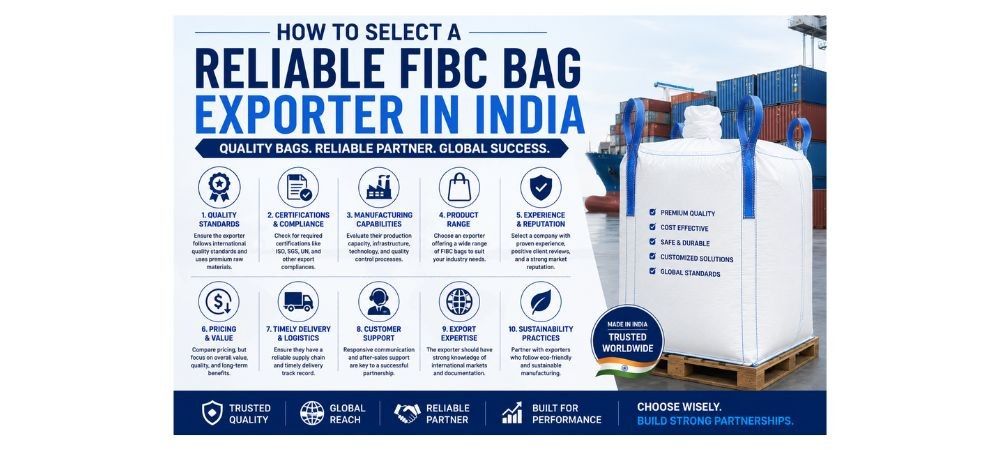
How to Select a Reliable FIBC Bag Exporter in India
The global demand for Flexible Intermediate Bulk Containers (FIBCs), commonly known as Jumbo Bags, continues to grow across industries such as agriculture, chemicals, food processing, pharmaceuticals, mining, and construction. As businesses increasingly seek efficient and cost-effective bulk packaging solutions, selecting the right FIBC bag exporter becomes a critical business decision.
India has emerged as one of the leading manufacturing and export hubs for FIBC bags, supplying high-quality packaging products to customers worldwide. However, with numerous suppliers in the market, choosing a reliable export partner requires careful evaluation.
This guide outlines the key factors businesses should consider when selecting trusted FIBC exporters in India and experienced jumbo bag suppliers for long-term packaging success.
Why India Is a Preferred Destination for FIBC Bags
India has established itself as a global leader in FIBC manufacturing due to several advantages:
- Advanced manufacturing capabilities
- Competitive pricing
- Skilled workforce
- High production capacity
- International quality standards
- Strong export infrastructure
Today, Indian manufacturers supply FIBC bags to markets across North America, Europe, the Middle East, Africa, Australia, and Asia.
The country’s robust manufacturing ecosystem enables suppliers to produce a wide variety of FIBC bags for different industries and applications. Many Indian manufacturers have invested heavily in modern machinery, automated production systems, and quality control processes to meet international customer expectations.
Another major advantage is India’s strong raw material availability and cost-effective production environment. This allows exporters to maintain competitive pricing while delivering products that meet global quality standards. As a result, international buyers continue to rely on Indian jumbo bag suppliers for both standard and customized packaging solutions.
India’s growing export network and logistics infrastructure further strengthen its position as a preferred sourcing destination. Reliable shipping routes, port facilities, and international trade experience help ensure smooth deliveries worldwide.
Understanding Your Packaging Requirements First
Before selecting an exporter, businesses should clearly define their packaging needs.
Choosing the right FIBC supplier begins with understanding your own product and operational requirements. Every industry has unique packaging demands, and clearly identifying these requirements helps narrow down the list of suitable suppliers.
Businesses should evaluate product characteristics, transportation methods, storage conditions, regulatory requirements, and customer expectations before initiating discussions with suppliers. A clear understanding of these factors enables manufacturers to recommend the most suitable bulk packaging solution.
Proper planning at this stage reduces the likelihood of costly mistakes and ensures that the selected packaging solution aligns with long-term operational goals.
Product Type
What material will be stored or transported?
Examples include:
- Agricultural products
- Chemicals
- Food ingredients
- Minerals
- Construction materials
- Plastic granules
Different products require different packaging specifications. For example, food ingredients may require food-grade FIBC bags, while hazardous chemicals may require conductive or UN-certified bags. Understanding the physical and chemical characteristics of the material is essential when selecting a suitable bag design.
The type of product being handled also affects fabric selection, liner requirements, filling systems, discharge mechanisms, and safety features. Choosing the correct bag improves product protection and transportation efficiency.
Bag Specifications
Determine:
- Safe Working Load (SWL)
- Filling and discharge options
- Bag dimensions
- Fabric requirements
- Coated or uncoated bags
- Food-grade requirements
Clearly defining bag specifications helps ensure that the selected supplier can meet your operational needs. Factors such as weight capacity, stacking requirements, and handling methods directly influence bag design and performance.
Customization may also be required depending on industry-specific requirements. Working with an experienced exporter helps businesses identify the most effective bag configuration for their products.
Industry Compliance
Different industries require specific certifications and packaging standards.
Understanding these requirements helps narrow down the right supplier.
Compliance is particularly important for industries such as food processing, pharmaceuticals, and chemicals. Regulatory standards often dictate packaging materials, testing procedures, traceability requirements, and safety measures.
Choosing a supplier familiar with industry regulations helps ensure compliance while minimizing operational risks and potential legal complications.
Key Factors to Evaluate When Choosing FIBC Exporters in India
Selecting the right supplier requires careful consideration of multiple factors. Beyond pricing, businesses should evaluate manufacturing capabilities, quality systems, export expertise, customer support, and overall reliability.
A comprehensive evaluation process helps identify suppliers capable of supporting long-term growth while maintaining consistent product quality and service standards.
1. Manufacturing Experience and Industry Expertise
Experience often reflects a company’s ability to maintain consistent quality and handle complex packaging requirements.
Look for exporters with:
- Proven industry experience
- Diverse product portfolio
- International export history
- Technical knowledge
Experienced manufacturers are better equipped to recommend suitable packaging solutions for specific applications.
Companies with extensive industry experience often have a deeper understanding of customer challenges and market requirements. Their technical expertise allows them to provide practical recommendations that improve packaging efficiency and product safety.
Long-standing manufacturers have also refined their production processes over time, resulting in better quality control and operational consistency.
2. Product Range and Customization Capabilities
A reliable supplier should offer multiple FIBC solutions, including:
- Standard FIBC Bags
- U-Panel Bags
- Circular Bags
- Baffle Bags
- Conductive FIBC Bags
- Food Grade FIBC Bags
- UN Certified Bags
Customization options are equally important.
Evaluate whether the supplier can provide:
- Custom sizes
- Custom printing
- Different lifting loop configurations
- Specialized liners
- Industry-specific designs
Every business has unique packaging requirements. Suppliers that offer customization can tailor products according to specific storage, transportation, and operational needs.
A broad product portfolio also indicates manufacturing flexibility and expertise across multiple industries. This allows businesses to source different packaging solutions from a single supplier.
3. Quality Certifications and Compliance
Quality assurance should be one of the most important selection criteria.
Reliable FIBC exporters maintain strict quality control processes and comply with international standards.
Look for certifications such as:
- ISO Certification
- BRC Certification (where applicable)
- Food-grade compliance
- UN certification for hazardous materials
These certifications indicate a commitment to quality and safety.
Certifications demonstrate that a manufacturer follows established quality management systems and industry best practices. They also provide buyers with confidence regarding product consistency and regulatory compliance.
Regular audits and certification renewals further reflect a supplier’s dedication to maintaining high standards.
4. Manufacturing Infrastructure
A modern manufacturing facility demonstrates a supplier’s ability to meet large-volume orders while maintaining quality standards.
Evaluate:
- Production capacity
- Machinery and technology
- In-house testing facilities
- Quality control systems
- Research and development capabilities
Modern infrastructure helps ensure product consistency and timely delivery.
Advanced manufacturing facilities improve efficiency, reduce production errors, and support product innovation. Suppliers with strong infrastructure are often better equipped to handle large-scale projects and customized requirements.
Investment in technology also reflects a company’s commitment to continuous improvement and long-term growth.
5. Export Experience and Global Reach
Not all manufacturers are experienced exporters.
Choose suppliers with proven international shipping expertise.
A strong exporter should understand:
- Export documentation
- International compliance standards
- Shipping logistics
- Customs requirements
- Packaging regulations
This minimizes delays and operational risks.
Export experience is particularly important when dealing with complex international regulations and documentation requirements. Suppliers with global exposure can help ensure smooth transactions and efficient deliveries across international markets.
Their knowledge of different country requirements can significantly reduce supply chain disruptions.
6. Quality Testing Procedures
Quality testing is critical for ensuring safe bulk transportation.
Ask about testing procedures such as:
- Fabric strength testing
- UV resistance testing
- Load testing
- Top lift testing
- Seam strength testing
Reliable manufacturers conduct rigorous testing before dispatching products.
Testing verifies that products meet performance requirements under real-world conditions. Consistent quality testing reduces the risk of failures during storage and transportation.
Businesses should always request testing documentation and quality reports when evaluating suppliers.
7. Raw Material Quality
The quality of polypropylene used directly impacts bag performance.
Premium-grade raw materials provide:
- Better durability
- Higher load capacity
- Improved product protection
- Longer service life
Ask suppliers about their sourcing and quality standards.
High-quality raw materials contribute significantly to product reliability and longevity. Inferior materials may reduce load-bearing capacity and increase the risk of packaging failures.
Manufacturers committed to quality typically source premium-grade polypropylene from trusted suppliers.
8. Customer Support and Technical Assistance
Packaging requirements can vary significantly across industries.
A dependable supplier should offer:
- Technical consultation
- Product recommendations
- Responsive communication
- Post-sales support
Strong customer service contributes to smoother project execution and long-term partnerships.
Effective communication helps resolve issues quickly and ensures that projects remain on schedule. Suppliers that provide technical guidance can help businesses select optimal packaging solutions.
Strong support often differentiates exceptional suppliers from average ones.
9. Delivery Reliability
Late shipments can disrupt entire supply chains.
Evaluate a supplier’s ability to:
- Meet production schedules
- Handle bulk orders
- Maintain inventory planning
- Deliver on time
Consistency is often more valuable than simply offering the lowest price.
Reliable delivery performance helps businesses maintain production schedules and meet customer commitments. Suppliers with strong planning systems and operational discipline are better positioned to deliver consistently.
Long-term partnerships depend heavily on delivery reliability.
10. Pricing and Value
While pricing is important, businesses should focus on overall value rather than choosing solely based on cost.
Consider:
- Product quality
- Certification standards
- Service support
- Delivery reliability
- Long-term performance
Low-cost bags may result in higher operational risks and replacement expenses.
A slightly higher initial investment in quality packaging often delivers significant long-term savings through improved durability and reduced product losses.
Businesses should evaluate total ownership costs rather than focusing exclusively on purchase price.
Why Businesses Choose Pacific Bulk Bags
Pacific Bulk Bags has established itself as a trusted name among leading FIBC exporters in India by delivering high-quality bulk packaging solutions to customers across multiple industries.
Our Product Portfolio
- Standard FIBC Bags
- Jumbo Bags
- Baffle Bags
- Conductive FIBC Bags
- Food Grade FIBC Bags
- PP Woven Bags
- BOPP Bags
- FIBC Liners
What Sets Pacific Bulk Bags Apart?
- Advanced Manufacturing Facility
- International Quality Standards
- Custom Packaging Solutions
- Strict Quality Control Procedures
- Export-Focused Operations
- Competitive Pricing
- Timely Global Deliveries
- Dedicated Customer Support
Our commitment to quality, innovation, and customer satisfaction makes us a reliable partner for businesses seeking efficient bulk packaging solutions worldwide.
With years of manufacturing expertise and a strong focus on customer requirements, Pacific Bulk Bags delivers packaging solutions that support operational efficiency, product safety, and long-term value.
Frequently Asked Questions (FAQs)
1. Why are Indian FIBC exporters popular globally?
Indian FIBC exporters offer competitive pricing, high-quality manufacturing, international certifications, and strong export capabilities, making them preferred suppliers worldwide.
2. What industries use Jumbo Bags?
Jumbo Bags are widely used in agriculture, food processing, chemicals, pharmaceuticals, construction, mining, and plastics industries.
3. What certifications should an FIBC exporter have?
Common certifications include ISO certifications, food-grade compliance certifications, and UN certifications for specialized applications.
4. Can FIBC bags be customized?
Yes. Most experienced manufacturers offer customized sizes, designs, printing options, liners, and lifting configurations.
5. How do I evaluate the quality of FIBC bags?
Review testing reports, certifications, manufacturing processes, raw material quality, and sample products before placing large orders.
6. Why is export experience important when choosing a supplier?
Export experience helps ensure compliance with international regulations, efficient shipping processes, and smooth order fulfillment.
Building a Long-Term Packaging Partnership
Selecting the right FIBC exporter is more than a purchasing decision—it’s about establishing a reliable long-term partnership that supports your supply chain, protects your products, and contributes to operational efficiency. By evaluating factors such as manufacturing expertise, certifications, quality standards, customization capabilities, and export experience, businesses can confidently choose a supplier that meets their current and future packaging requirements.
As global supply chains continue to evolve, working with a dependable packaging partner becomes increasingly important. Businesses that invest time in selecting the right supplier often benefit from improved efficiency, lower operational risks, and stronger long-term growth opportunities.
For organizations seeking dependable jumbo bag suppliers and trusted FIBC exporters in India, Pacific Bulk Bags offers the expertise, quality, and global service standards required to support successful bulk packaging operations.