
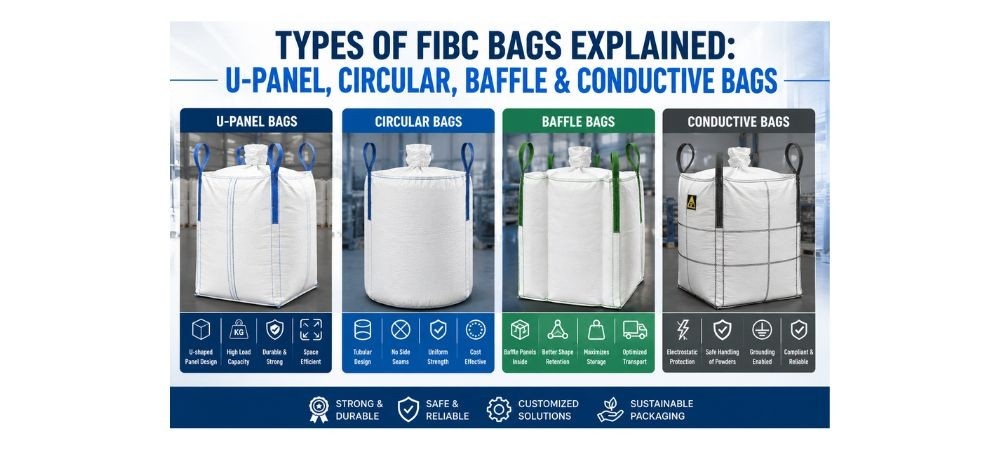
Bulk material handling requires packaging solutions that are strong, reliable, and tailored to specific industrial applications. Whether transporting agricultural products, chemicals, minerals, food ingredients, or construction materials, selecting the right type of FIBC bag can significantly impact operational efficiency, product safety, and transportation costs.
Flexible Intermediate Bulk Containers (FIBCs), commonly known as Jumbo Bags or Bulk Bags, are available in various designs to meet different storage and transportation requirements. Among the most widely used options are U-Panel Bags, Circular Bags, Baffle Bags, and Conductive FIBC Bags.
Understanding the differences between these bag types can help businesses choose the most suitable packaging solution for their operations.
As industries continue to focus on reducing logistics costs and improving supply chain efficiency, the demand for specialized FIBC bags is growing rapidly. Different industries have different packaging requirements, and selecting the right bag can directly affect storage capacity, transportation efficiency, workplace safety, and product protection. This guide explains the most commonly used types of FIBC bags and their applications to help businesses make informed packaging decisions.
FIBC (Flexible Intermediate Bulk Container) Bags are large woven polypropylene containers designed for storing and transporting dry, flowable materials in bulk quantities.
These bags are commonly used in:
FIBC bags offer high load-bearing capacity, easy handling, and cost-effective bulk transportation.
Their lightweight construction combined with exceptional strength makes them one of the most efficient industrial packaging solutions available today. These bags can typically carry between 500 kg and 2,000 kg of material while maintaining structural integrity during storage and transportation. Because of their flexibility and customization options, FIBC bags have become a preferred choice for manufacturers, exporters, distributors, and industrial suppliers worldwide.
Modern FIBC bags can also be customized with liners, filling spouts, discharge systems, printing, and specialized safety features. This adaptability allows businesses to optimize packaging according to their specific product and industry requirements.
Not all bulk materials have the same packaging requirements.
Factors such as:
determine which type of FIBC bag is most suitable.
Selecting the right bag helps improve:
Choosing the wrong type of bulk bag can result in inefficient storage, increased transportation costs, product contamination, or safety concerns. For example, food products require hygienic food-grade bags, while hazardous powders may require conductive bags to prevent static electricity buildup. Understanding the differences between various FIBC designs helps businesses maximize efficiency while reducing operational risks.
In today’s competitive marketplace, optimizing packaging solutions is just as important as optimizing production processes. Selecting the correct FIBC bag can improve supply chain performance and contribute to long-term cost savings.
U-Panel Bags are among the most commonly used FIBC bags. They are constructed using three main pieces of woven polypropylene fabric two side panels and one continuous panel forming the bottom and opposite sides of the bag.
This design provides excellent strength and durability.
The U-Panel design has been widely adopted because it offers a reliable balance between strength, affordability, and versatility. These bags maintain their shape well when filled and can safely handle heavy loads across multiple industries. Their construction provides excellent support for bulk materials while ensuring stability during transportation and storage.
Because of their proven performance, U-Panel bags remain one of the most popular FIBC options for industrial packaging applications worldwide.
The fabric used in U-Panel bags is engineered to withstand demanding industrial conditions. Their robust construction ensures reliable performance even when handling dense and heavy materials. This makes them a preferred choice for businesses seeking durable and economical bulk packaging solutions.
U-Panel Bags are widely used for:
They are particularly effective in industries where large quantities of bulk products need to be stored and transported efficiently. Their versatility allows them to support a wide range of industrial applications.
Their simple yet durable construction allows businesses to achieve cost-effective logistics without compromising product safety. This combination of affordability and performance makes U-Panel bags one of the most commonly used FIBC designs.
Circular FIBC Bags are manufactured using tubular woven polypropylene fabric. Unlike U-Panel bags, these bags have no side seams along the body, reducing potential weak points.
The circular weaving process provides uniform strength throughout the bag.
Because they contain fewer seams, circular bags often provide enhanced structural integrity and durability. Their seamless body helps distribute weight evenly and reduces stress concentration points. This results in improved performance during handling, storage, and transportation.
Many industries prefer circular bags for applications requiring consistent quality and reliable containment of fine materials.
These features contribute to improved bag performance and reduced risk of failure during transportation. Their streamlined manufacturing process also supports consistent product quality.
Circular bags are commonly used in industries that require dependable packaging for bulk materials that flow easily and require secure containment.
Their durability and consistent performance make circular bags a preferred packaging solution for many industrial applications.
Baffle Bags, also known as Q Bags, are designed with internal fabric panels sewn into the corners. These internal baffles help the bag maintain a square shape when filled.
Unlike standard bulk bags that tend to bulge outward, Baffle Bags retain their structure and maximize storage efficiency.
The unique square shape allows businesses to make better use of available storage and shipping space. This feature makes Baffle Bags highly valuable for industries focused on reducing logistics costs and improving operational efficiency.
The structured design improves warehouse management and allows more products to be stored within the same area. This contributes to lower storage and transportation expenses.
These bags are widely used across industries that require efficient storage and transportation of bulk materials.
For businesses focused on logistics efficiency, Baffle Bags are often considered one of the most cost-effective bulk packaging solutions available. Their ability to maximize container utilization can significantly reduce shipping costs over time.
Conductive FIBC Bags are specially designed for industries where static electricity can pose serious safety risks.
These bags are manufactured using conductive materials that safely dissipate electrostatic charges generated during filling, transportation, or discharge.
Safety remains a critical concern in industries handling combustible powders and hazardous materials. Conductive FIBC bags provide an effective solution by minimizing electrostatic risks and supporting safe material handling practices.
When handling combustible powders or flammable materials, static discharge can potentially create sparks that may lead to:
Conductive FIBC Bags help reduce these risks.
In industrial environments, even a small electrostatic spark can have serious consequences. Using conductive packaging solutions helps protect personnel, facilities, and valuable products while ensuring compliance with safety regulations.
These industries frequently rely on conductive bulk bags to safely transport sensitive and potentially hazardous materials.
Their specialized design makes them an essential packaging solution for industries where safety and compliance are top priorities.
| Feature | U-Panel Bags | Circular Bags | Baffle Bags | Conductive FIBC Bags |
| Strength | High | High | High | High |
| Shape Retention | Good | Moderate | Excellent | Good |
| Container Efficiency | Standard | Standard | Excellent | Standard |
| Static Protection | No | No | No | Yes |
| Stackability | Good | Good | Excellent | Good |
| Hazardous Material Handling | No | No | No | Yes |
When selecting a FIBC bag, consider the following:
Determine whether the product is:
Evaluate:
Consider:
Industries handling flammable products should consider Conductive FIBC Bags to reduce electrostatic risks.
Businesses looking to maximize logistics efficiency often benefit from Baffle Bags due to improved space utilization.
Working with an experienced FIBC manufacturer can help businesses identify the most suitable packaging solution based on product characteristics, operational requirements, and regulatory standards.
At Pacific Bulk Bags, we manufacture a comprehensive range of high-quality FIBC products designed to meet international packaging standards.
Our Product Portfolio
Our team works closely with clients to provide bulk packaging solutions tailored to their operational and industry-specific requirements. We focus on product quality, customization, consistency, and customer satisfaction. From standard jumbo bags to specialized industrial packaging solutions, Pacific Bulk Bags delivers products that support efficient and reliable bulk material handling.
Choosing the right type of FIBC bag is essential for improving product safety, reducing logistics costs, and enhancing operational efficiency. Whether your business requires the durability of U-Panel Bags, the seamless strength of Circular Bags, the space-saving advantages of Baffle Bags, or the safety features of Conductive FIBC Bags, selecting the appropriate packaging solution can make a significant difference in your supply chain performance.
As industries continue to prioritize cost optimization, sustainability, and operational efficiency, the demand for specialized FIBC bags will continue to grow. Businesses that invest in the right packaging solutions today can achieve better storage utilization, safer transportation, and improved long-term profitability.
By partnering with an experienced FIBC bags manufacturer like Pacific Bulk Bags, businesses can access customized bulk packaging solutions designed to meet the demands of modern industries.
The most common types of FIBC bags include U-Panel Bags, Circular Bags, Baffle Bags (Q Bags), and Conductive FIBC Bags. Each type is designed for specific storage, transportation, and safety requirements.
Baffle Bags are used to improve storage efficiency and container utilization. Their square shape allows better stacking and reduces transportation costs.
Circular Bags are manufactured using tubular woven fabric with fewer seams, while U-Panel Bags are constructed using multiple fabric panels. Both offer excellent strength but differ in construction and shape retention.
Conductive FIBC Bags should be used when handling combustible powders or materials where electrostatic discharge could create safety hazards.
Baffle Bags may have a slightly higher initial cost, but they often reduce logistics expenses through improved storage and transportation efficiency.
Chemical, pharmaceutical, petrochemical, and powder processing industries commonly use Conductive FIBC Bags to maintain safety and compliance standards.